
An earlier version of this page gave a list of swaps for anyone eating to lose weight: low-fat milk for full-fat, water or natural juice for fizzy drinks, smoothies for ice cream. Two of them, lower-fat milk and water, match NHS advice. A few of the others carry the very calories and sugar they were meant to remove, and those are the hidden saboteurs worth checking. The figures below come from USDA FoodData Central (SR Legacy records, 2019) and the guidance from NHS pages.
"Natural" juice and the smoothie swap
The NHS counts the sugars "found naturally in honey, syrups and unsweetened fruit juices and smoothies" as free sugars, the type it says to cut down on. It sets one limit for the lot: "Your combined total of drinks from fruit juice, vegetable juice and smoothies should not be more than 150ml a day, which is a small glass."
USDA numbers show why juice is not the lighter option it looks. Per 100 g, raw orange juice has 45 kcal and 8.4 g of sugars. A raw navel orange has 49 kcal and 8.5 g of sugars, almost the same. The difference is fibre: 0.2 g in the juice against 2.2 g in the fruit. The NHS weight-loss page puts it plainly, saying juices and smoothies "contain a lot of sugar and do not fill you up in the same way as whole fruit." So the old "ice cream to smoothies" swap still falls under that same 150ml.
Low-fat yoghurt that is sweeter than the full-fat one
The older list put homemade yoghurt against high-fat yoghurt, as if fat were the only number on the pot. The NHS sugar page warns: "lower fat does not necessarily mean low sugar. Some lower-fat yoghurts can be sweetened with refined sugar, fruit juice concentrate, glucose, and fructose syrup."
Here is how three USDA yoghurt records compare per 100 g:
| Yoghurt (USDA record) | Energy | Total sugars | Fat |
|---|---|---|---|
| Fruit, low fat (FDC 170889) | 99 kcal | 18.6 g | 1.15 g |
| Plain, low fat (FDC 170886) | 63 kcal | 7.04 g | 1.55 g |
| Plain, whole milk (FDC 171284) | 61 kcal | 4.66 g | 3.25 g |
The low-fat fruit yoghurt has the least fat of the three, and also the most calories and the most sugars. The NHS weight-loss page asks for "lower fat, lower sugar yoghurts" and gives "plain low fat yoghurt" as its example, which is the middle row.
Honey, date syrup and the sweetener question
The NHS lists honey beside table sugar: "Added sugars, such as table sugar, honey and syrups, should not make up more than 5% of the energy you get from food and drink each day. That's about 30g a day for anyone aged 11 and older." USDA gives honey 304 kcal and 82.1 g of sugars per 100 g. The NHS wording names syrups in general; it does not mention date syrup by name.
The old list paired date syrup and honey with artificial sugar. On that point the NHS is narrower. For tea or coffee it says to "gradually reduce the amount until you can cut it out altogether, or try swapping to sweeteners instead."
Cereal bars, sauces and ready-made soups
The NHS calls out cereal bars directly: "despite their healthy image, many cereal bars can be high in sugar and fat." The USDA record for a plain hard granola bar (FDC 167542) shows 471 kcal, 28.6 g of sugars and 19.8 g of fat per 100 g. The NHS label rule says more than 22.5 g of total sugars per 100 g is high, so that bar is over the line. For biscuits, the NHS suggests oatcakes, oat biscuits or unsalted rice cakes.
Savoury food hides sugar too. "Some ready-made soups, stir-in sauces and ready meals can also be higher in sugar than you think," the NHS says, and ketchup "can have as much as 23g of sugar in 100g."
Where dates fit in
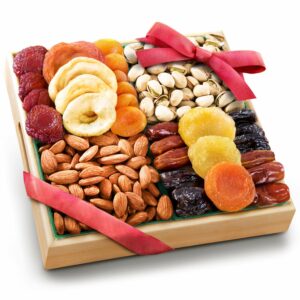
Dates are not exempt. The NHS says "Dried fruit, such as raisins, dates and apricots, is high in sugar" and that it is "best enjoyed at mealtimes – as part of a dessert, for example – rather than as a snack." Its portion of dried fruit is 30g. USDA has no record for Piarom, the dark, semi-dry Iranian date this site is named after. Its two SR Legacy date records list 66.5 g of total sugars per 100 g for Medjool and 63.4 g for Deglet Noor, both well above the 22.5 g line. The full nutrient breakdown is on our date fruits and nutrients page.
Breakfast: skipping it is not the saboteur either
The old version opened with "Do not skip breakfast", the same tip that appears on the NHS 8 tips for healthy eating page. The trials on breakfast and weight are less clear-cut. A multisite 16-week trial randomly assigned 309 overweight and obese adults to be told to eat breakfast, to skip it, or to a control group. The advice changed what people reported eating at breakfast but "had no discernable effect on weight loss." A 2019 BMJ review of 13 trials found a small weight difference, 0.44 kg, in favour of the people who skipped breakfast in the seven trials that measured weight. It warned that the trials were short and mostly low quality.
Whatever the timing, the NHS sugar page suggests plain porridge, no-added-sugar muesli, wholemeal toast and "plain natural yoghurt topped with chopped fruit" in place of sugary cereals. If you usually add sugar to your porridge, it suggests "a few chopped dried apricots or a sliced or mashed banana instead."
This page is general information, not medical advice. The NHS advises talking to a GP or healthcare professional before changing your diet to lose weight if you have a medical condition, follow a special diet for your health, or have had an eating disorder. More about this site is on the About Us page, and the Contact Us page gives a WhatsApp number.