
Every date sold in Malaysia is imported, because the country has no commercial date-growing trade. So when a shop, caterer or repacker here goes looking for a Piarom dates exporter, the real job is writing an order that a seller can quote on and a Malaysian buyer can check when the goods land. This guide walks through that order from the spec sheet to the paperwork.
It leans on three outside sources, all read in November 2026: the FAO date palm handbook (Plant Production Paper 156, chapter IX on harvest, packing and shipment), the US trade.gov guide to Incoterms, and the import pages of MAQIS, Malaysia's quarantine and inspection department. The Malaysian prices near the end come from one wholesaler's list, checked the same month.
Start with what Piarom is, and what it is not
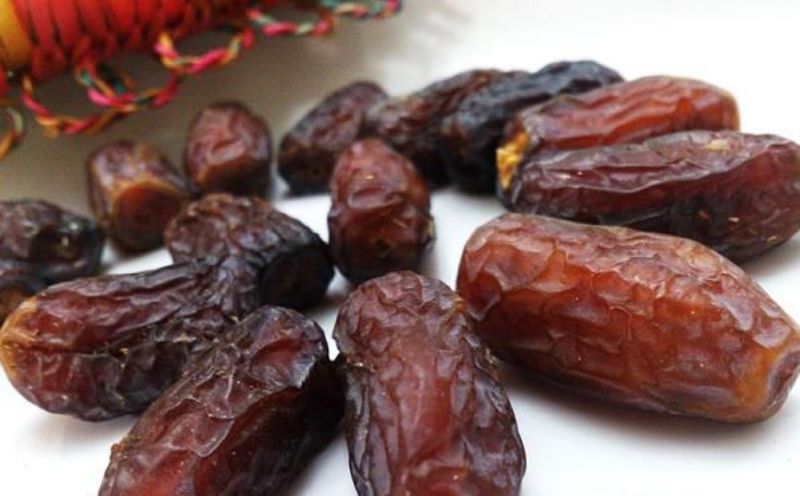
Piarom comes from Iran, from Hormozgan province. It is a dark, semi-dry date with a thin skin. That is the whole of what we will state about the fruit itself, and it is enough to write a spec.
Two mix-ups are worth heading off before any quote arrives. Piarom is not from Bam; Bam, in Kerman province, is where Mazafati comes from, and Mazafati is a very soft, high-moisture date that needs refrigeration. And Piarom and Mariami are separate varieties, even though both are Iranian, dark and semi-dry. If an offer sheet runs the two names together, ask the seller which variety is actually in the box.
What to put in the purchase spec
Grade letters may sit at the top of a quote. They are the least reliable line on it. A, AA, AAA and Jumbo are each importer's own size sorting, not an international standard. Two sellers can both write "AAA" and mean different fruit. A written size description and a sample from the lot tell you far more.
Here is a simple spec sheet to send to any Piarom dates exporter before asking for a price. Each line is something FAO's handbook names as part of packing, shipment or quality control.
| Line on the spec | What to write | Why it matters |
|---|---|---|
| Variety | Piarom, Iran (Hormozgan) | Keeps it apart from Mariami and Mazafati on every document |
| Grade | The seller's grade name plus a size description in words | Grade letters are each importer's own sorting |
| Pack | Bulk or retail, and the pack weight | FAO describes these as two different kinds of packing |
| Label details | Weight, country of origin, quality, expiry date | FAO says most importing countries' laws require these on the package |
| Fumigation | Which fumigant was used, and when | FAO notes fumigation is used before long storage |
| Spray record | Materials, dates, concentration, days before harvest, residue level | Many clients ask growers to document this, FAO writes |
| Incoterm | Three letters plus the named port or place | Decides who pays and manages each leg |
| Documents | Customs, payment and transport papers plus a phytosanitary certificate | FAO's list for every shipment |
Bulk or retail: the packing options a Piarom dates exporter can quote
FAO splits export packing into two kinds. Bulk packs are usually cardboard boxes, sometimes with the fruit in a plastic bag inside for extra protection and to hold its moisture. The usual weight is 5 kg or 15 lb, depending on where the fruit was grown or where it will be sold. Bulk fruit goes to buyers who want large quantities, and it may be repacked for retail in the country where it is sold.
Retail packs come in more shapes. FAO lists four:
| Retail format (FAO) | How FAO describes it |
|---|---|
| Glove box | Dates arranged in a "fish bone" pattern, usually 26 to 30 dates in two layers, 220 g to 250 g a box |
| Window box | Usually cardboard, with a cellophane window showing the fruit, filled by automatic weighing |
| Tub | Transparent plastic, client information usually on the lid, sizes to the client's demand |
| Bag | Usually PET polyethylene, the cheapest and most economical way of packing |
Packing material also has to suit the trip. FAO says PVC must not be used, that some materials cannot take a temperature of -18°C, and that in storage cardboard is sensitive to humidity while various plastics are sensitive to low temperatures. If you plan to keep stock chilled or frozen after it lands, say so in the order so the packing is chosen for it.
Quote terms: reading FOB, CFR and CIF
An export price may be written with an Incoterm. trade.gov describes the Incoterms as 11 rules issued by the International Chamber of Commerce. They set out who pays for and manages the shipment, insurance, documentation, customs clearance and other logistics, and each rule also says which side bears the cost of those tasks.
The three letters always come with a place, and the place changes the meaning.
| Term | Full name | Place written after it |
|---|---|---|
| EXW | Ex Works | Place of delivery |
| FOB | Free on Board | Named port of loading |
| CFR | Cost and Freight | Named port of destination |
| CIF | Cost Insurance and Freight | Named port of destination |
| DDP | Delivered Duty Paid | Place of destination |
So two quotes for the same Piarom grade, one FOB at an Iranian port and one CIF at Port Klang, are not two prices for the same thing. The CIF name includes insurance and freight; the FOB name mentions neither. Ask each seller what their figure covers before you compare them. And if a contract still cites Incoterms 2010, trade.gov says that is valid when all parties agree and the version is correctly identified on the export documents.
Fumigation and storage questions
Fruit meant to be stored for a long period, several months to a year in FAO's words, has to be cleaned of pests first, and that is done by fumigation in the field or in sealed rooms at the packinghouse. FAO names methyl bromide as the substance most often used, notes that it falls under the Montreal Protocol because of its damage to the ozone layer, and calls phosphine the principal alternative for durable commodities. A buyer does not need to choose the method. Asking which one was used, and getting the answer in writing, is enough.
On storage, FAO gives -18°C as the temperature commonly used for long-term keeping of several varieties, Medjool among them. It also reports research from Tunisia in which drier fruit could be kept longer and at warmer temperatures: the wettest group needed 0°C for six to eight months, while the driest could sit at 25°C for up to a year. Those figures come from that research, not from Piarom tests, so treat them as a reason to ask the seller for their own storage advice for the lot.

Papers on both ends
FAO's handbook says every shipment should be documented in detail, and that besides the customs, payment and transport papers a phytosanitary certificate should go with the fruit. The relevant authorities issue it, and it states the fruit is free of pests and diseases and meets the importing country's standards. Our earlier piece on minimum orders, payment terms and asking for samples covers the commercial side of the same conversation.
The Malaysian side starts with the buyer. MAQIS asks anyone registering as an importer, exporter or agent to fill in its Borang Syarat-syarat Pendaftaran first, then begin in the SPEED system, and apply for the MAQIS permit through ePermit Dagang Net. Its food page says the steps differ for a company and for an agent-importer, and it sends food-import questions to the Food Safety and Quality Division of the Ministry of Health. Neither page singles out dates. Certifications are a separate list again, and this rundown of certifications asked of Malaysian date suppliers is a useful companion to the import steps.
The order, step by step
- Send the spec sheet above and ask for a sample from the actual lot.
- Ask for the quote with its Incoterm and named port, plus the pack type and weight.
- Check your own MAQIS registration and permit route before the fruit is loaded.
- Agree the documents list, including the phytosanitary certificate.
- Ask that each consignment be sampled to confirm its quality has not changed. FAO advises this because fruit is sometimes stored for up to several months before shipment.
- Ask that labels and markings be checked during loading against Malaysian law and your own needs, as FAO recommends.
Timing belongs in the same conversation. Gulf and Middle-East dates are mostly harvested from late summer to autumn, roughly August to November, and new-season stock reaches Malaysia some weeks later. Demand here peaks before and during Ramadan, and Hari Raya, weddings (hantaran), kenduri and umrah gifts are other peaks. If your stock has to be on the shelf by a set date, put that date in the contract. How a seller handles that kind of promise says a lot, which is the thread running through this piece on building long-term trust between supplier and buyer.
A Malaysian price reference for semi-dry Iranian dates
A landed cost only means something next to a Malaysian selling price. The wholesaler list we checked in November 2026 had no listing named Piarom, so the reference here is Mariami, which is a separate variety but also Iranian, dark and semi-dry. These are every in-stock Mariami listing on that list:
| Listing | Pack | Price | RM per kg |
|---|---|---|---|
| Mariami A Normal 2026 | 5kg | RM75 | RM15.00 |
| Mariami AA 2026 | 5kg | RM129 | RM25.80 |
| Mariami AAA VIP 2026 | 5kg | RM148 | RM29.60 |
| 1kg Mariami AAA | 1kg | RM40 | RM40.00 |
Five other Mariami listings on the same list were out of stock that day. On the in-stock 5kg packs, moving from A Normal to AA added RM54, and AA to AAA VIP added another RM19. Those letters are this one seller's sorting, which is exactly why the spec sheet asks for sizes in words. For a wider view of how sellers are compared, see our guide to choosing a date supplier.
Short answers
Are Piarom and Mariami different varieties?
Yes. They are separate Iranian varieties, although both are dark and semi-dry.
Does the exporter handle my Malaysian import permit?
MAQIS registers the importer and issues the permit through ePermit Dagang Net, so that side sits with the Malaysian buyer or an agent-importer. The seller's side is the shipment's own papers, including the phytosanitary certificate.
Is a 5kg pack a standard size?
FAO gives 5 kg or 15 lb as the usual weight for bulk export packs, depending on the producing or selling country. Confirm the weight on the quote either way.
Before you sign with any Piarom dates exporter, get the variety, the size description, the Incoterm with its named port and the documents list on one page, and keep the sample from the lot until the shipment has been checked. More about this site is on the About Us page and the contact page.